
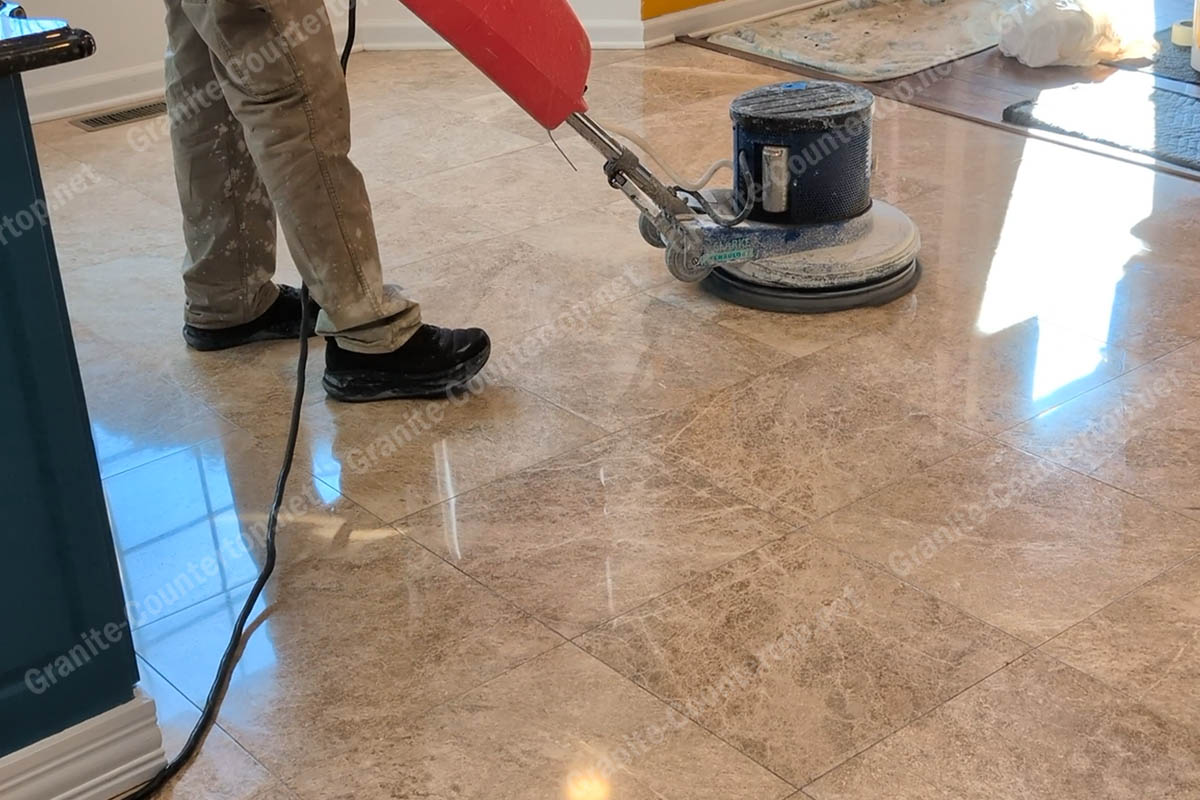
Marble Floor Polishing and Restoration in Westchester County, NY
Marble floors are one of the most beautiful natural stone surfaces available, but they can lose their original appearance with years of foot traffic, dirt, scratches, stains, etching, and improper cleaning. Even high-quality marble can eventually become dull, worn, cloudy, or uneven in appearance.
Professional marble floor polishing and restoration can dramatically improve the appearance of worn marble without replacing the existing floor. Depending on the condition of the stone, restoration may include professional cleaning, stain treatment, diamond grinding, honing, polishing, and sealing.
We specialize in marble floor cleaning, marble floor polishing, honing, and restoration in Westchester County, New York. Our goal is to restore the natural beauty of the existing marble while using the appropriate process for the type and condition of the floor.
We also provide professional marble countertop and vanity cleaning, polishing, restoration, and sealing for residential and commercial customers.
Table of Contents
- Professional Marble Floor Cleaning
- Marble Floor Polishing and Restoration
- Why Marble Floors Lose Their Shine
- Diamond Grinding, Honing and Polishing
- Marble Stain, Scratch and Etch Removal
- Marble Countertop Cleaning, Polishing and Sealing
- More Than 30 Years of Natural Stone Experience
- Request a Marble Floor Polishing Estimate
1. Professional Marble Floor Cleaning
Professional marble floor cleaning is an important first step in restoring the appearance of natural stone. Over time, marble floors can collect dirt, dust, oils, residue, and other materials that become embedded in the surface and grout lines.
High-traffic areas are especially affected because dirt and fine particles can act like an abrasive against the marble surface. This can gradually contribute to scratches, dullness, and visible traffic patterns.
Before polishing a marble floor, the surface should be properly cleaned and evaluated. Cleaning can help remove surface buildup and make it easier to determine which areas require additional restoration.
We use a professional approach based on the condition of the marble rather than treating every floor the same way. Depending on the surface, cleaning may be followed by honing, polishing, stain treatment, or more extensive restoration.
2. Marble Floor Polishing and Restoration
Marble floor polishing is one of our primary services. A polished marble floor can gradually lose its shine from everyday foot traffic, scratches, etching, dirt, and years of use.
When a marble floor becomes dull, simply cleaning the surface usually will not restore the original shine. The condition of the stone must first be evaluated to determine whether the floor needs light polishing, honing, or a more complete restoration process.
Professional marble floor restoration can involve several stages. Depending on the condition of the floor, the process may include deep cleaning, stain treatment, diamond grinding, honing, polishing, and sealing.
The purpose of the restoration process is not simply to make the marble shiny. The surface must first be properly prepared so that the final finish is as consistent as possible across the entire floor.
When necessary, damaged or heavily worn areas can be worked through progressively finer diamond abrasives before the final polishing stage. This helps reduce visible scratches, etching, dull traffic areas, and other surface imperfections.
The final polishing process can bring back a brighter, smoother and more reflective appearance while enhancing the natural color and veining of the marble.
Not every floor requires complete restoration. Some marble floors may only need professional cleaning and polishing, while others may require more extensive honing or refinishing. We evaluate the actual condition of the floor before recommending the appropriate process.
3. Why Marble Floors Lose Their Shine
There are several reasons why a marble floor that was once bright and reflective can become dull over time.
- Foot traffic: Constant walking gradually wears the polished surface, especially in entrances, hallways, kitchens, and other heavily used areas.
- Dirt and grit: Fine particles tracked into a building can create small scratches and wear on the surface.
- Etching: Acidic substances can react with marble and create dull or cloudy areas.
- Scratches: Furniture, dirt, grit, and everyday use can create visible surface scratches.
- Stains: Because marble is porous, certain liquids and materials can penetrate the stone and cause discoloration.
- Improper cleaning: Harsh or acidic cleaning products can damage the finish and contribute to etching.
Over time, these problems can cause a marble floor to look uneven, with some areas appearing shiny while heavily used areas appear dull.
Professional restoration is designed to address the condition of the stone rather than simply covering the problem with a temporary surface product.
4. Diamond Grinding, Honing and Polishing
Marble floor restoration can involve different levels of diamond abrasion depending on the condition of the stone. The process should be selected based on the depth of the damage and the finish the customer wants.
Diamond Grinding
Diamond grinding is used when a marble floor has more significant surface imperfections. It can help address deeper scratches, uneven areas, and other conditions that cannot be corrected through light polishing alone.
Grinding removes a controlled amount of material from the surface so the marble can be prepared for the following restoration stages.
Marble Honing
Honing uses progressively finer abrasives to refine the marble surface. Honing can reduce scratches, etching, dullness, and other surface imperfections while producing a smooth matte or satin appearance.
A honed finish can also be the desired final appearance for customers who prefer marble without a highly reflective shine.
Marble Polishing
Polishing uses finer abrasives to create a brighter and more reflective finish. When the marble is suitable for polishing and the surface has been properly prepared, professional polishing can bring out the depth, color, and natural veining of the stone.
For a high-gloss finish, proper preparation is important. Polishing a damaged surface without first addressing the underlying wear or scratches can result in an inconsistent finish.
Our technician evaluates the marble before determining which level of grinding, honing, and polishing is appropriate.
5. Marble Stain, Scratch and Etch Removal
Marble floors can develop stains, scratches and etching as part of normal use. The type of damage is important because different problems require different treatments.
Etching occurs when acidic materials react with the marble surface. This can leave dull, cloudy or rough-looking areas that ordinary cleaning cannot remove.
Staining occurs when certain substances penetrate the porous stone. Oil, food, beverages, rust and other materials can cause discoloration.
Scratches and traffic wear can gradually reduce the clarity and shine of a polished marble floor.
Depending on the condition of the floor, professional cleaning, stain treatment, honing, grinding, polishing, or a combination of these processes may be recommended.
6. Marble Countertop Cleaning, Polishing and Sealing
Although marble floor polishing is a major part of our work, we also provide professional cleaning and polishing for marble countertops and bathroom vanities.
Marble countertops can develop dull areas, water marks, stains, etching, scratches, and loss of polish around sinks and frequently used areas.
Professional countertop cleaning and polishing can improve the appearance of the existing marble and bring back more of its natural depth and shine.
After cleaning and polishing, sealing may be recommended depending on the type and condition of the marble. A suitable sealer can help reduce the penetration of liquids and staining materials, although sealing does not make marble completely stain-proof.
We can evaluate the countertop and recommend whether cleaning, polishing, honing, stain treatment, sealing, or a combination of services is appropriate.
7. More Than 30 Years of Natural Stone Experience
Marble floor restoration requires experience because every natural stone surface can respond differently to cleaning, grinding, honing and polishing.
Our technician has more than 30 years of hands-on experience working with marble and other natural stone surfaces.
We understand that a marble floor with light dullness may require a different process from a floor with deep scratches, etching, stains, uneven wear, or extensive traffic damage.
Before recommending a process, we consider the type of marble, its existing finish, the condition of the surface, and the result the customer wants to achieve.
Our goal is to restore the marble as effectively as possible while maintaining realistic expectations about the existing stone and its condition.
8. Request a Marble Floor Polishing Estimate
If your marble floor has become dull, scratched, stained, etched, or worn, the easiest way to get started is to send us clear photos of the floor.
For larger marble floors, send several photos from different areas of the room. Include wider photos that show the overall floor as well as close-up photos of the areas with the most damage.
Please include your ZIP code, name, and a short description of the condition of the floor. Tell us whether you are mainly looking for cleaning, polishing, stain removal, honing, or complete restoration.
Photos allow us to make a preliminary assessment, but they cannot always show the depth of scratches, etching, stains, or other surface conditions. A final recommendation or price may require an in-person evaluation.
We also provide professional marble countertop and vanity cleaning, polishing, restoration, and sealing.
Based in Westchester County, New York, we provide professional marble floor cleaning, polishing, honing, and restoration services throughout the Westchester County area.
Send us your photos at MegastoneNY@gmail.com to get started.